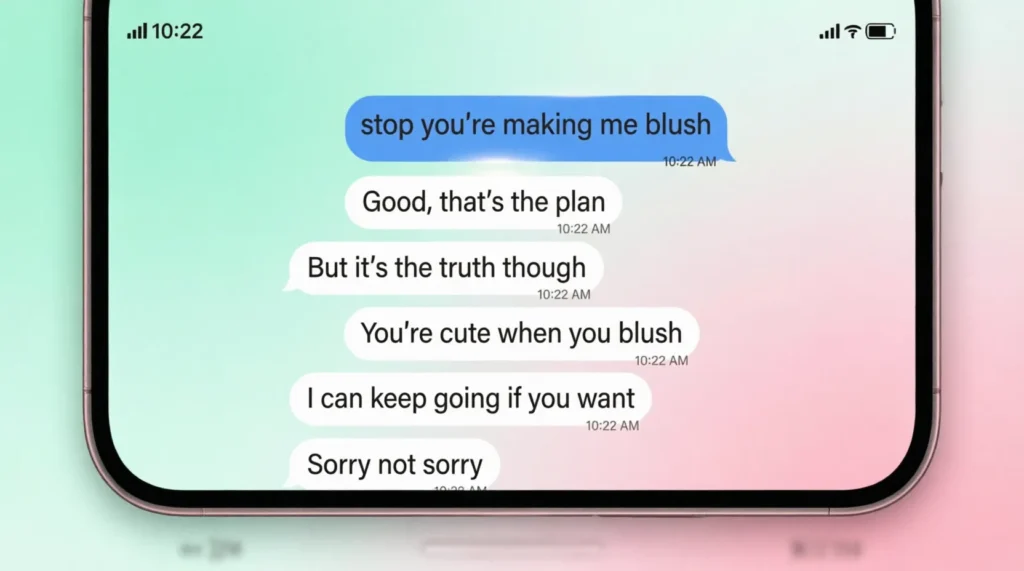
In short, when someone says “stop you’re making me blush,” they’re usually signaling that they like the attention, feel flattered, or enjoy the connection. The best response depends on your relationship and tone, but a playful, warm, or sincere reply often keeps the conversation flowing naturally. Let’s explore exactly what to say and when to say it.
Why Responding To Stop You’re Making Me Blush Feels Tricky
You’re staring at your phone after sending a compliment. A message pops up: “Stop, you’re making me blush.” Suddenly, what felt easy a second ago becomes surprisingly complicated.
Do you keep flirting? Do you back off? Do you joke about it? Many people overthink this moment because it involves a little vulnerability from both sides.
When someone says this, they’re revealing an emotional reaction. Even if they’re being playful, they’re acknowledging that your words affected them. That can make you feel pressure to respond perfectly.
Communication researchers often note that small moments of emotional openness create opportunities for connection. The challenge with responding to stop you’re making me blush is finding a reply that feels genuine without sounding forced or awkward.
The good news is that you don’t need a perfect response. You just need one that matches the energy of the conversation.
What Your Reply Really Communicates
Your response does more than continue the conversation. It signals how you handle affection, compliments, and emotional moments.
Playful replies show confidence and help keep the mood light.
Warm replies show sincerity and emotional intelligence.
Overly intense replies can make the other person feel pressured.
Dismissive replies can accidentally shut down a sweet moment.
A simple response can say a lot. That’s why responding to stop you’re making me blush works best when you focus less on being clever and more on matching the tone the other person is already using.
10 Best Ways to Reply to Stop You’re Making Me Blush
Playful Replies
“Mission accomplished.”
“Good, that means my plan is working.”
“I haven’t even started yet.”
“Should I stop or keep going?”
These replies work when the conversation is already lighthearted and teasing. They keep the playful energy alive without making things feel too serious.
Sweet Replies
“You deserve every compliment.”
“I’m just telling the truth.”
“Then maybe you should hear it more often.”
“I like seeing you happy.”
These responses add warmth and sincerity. They’re ideal when you want the other person to feel appreciated rather than teased.
Flirty Replies
“What can I say? You make it easy.”
“I kind of like making you blush.”
“Now I’m curious how red your cheeks are.”
“Just wait until I have even nicer things to say.”
Flirty responses work best when there’s already clear romantic interest. They acknowledge the chemistry without rushing things.
Funny Replies
“Uh-oh, should I call the blush police?”
“I’ll send an apology card immediately.”
“That’s not blush, that’s your VIP reaction.”
“Don’t worry, I accept full responsibility.”
Humor can ease tension and make the exchange memorable. If either of you tends to get shy, a funny reply often keeps things comfortable while maintaining the connection.
Tone Matching — Reading the Situation First
Before choosing a response, take a second to read the room.
Consider how well you know them. A close friend may appreciate playful teasing, while someone new might respond better to a gentler reply.
Look at the conversation leading up to it. If you’ve been exchanging compliments, continuing that energy usually feels natural.
Think about their personality. Someone who is shy may prefer a sweet response, while someone outgoing might enjoy a bolder one.
Pay attention to the platform. A casual text allows for playful banter, while a public comment may call for a lighter touch.
The best response to stop you’re making me blush isn’t always the funniest or flirtiest one. It’s the one that sounds like something you would actually say.
What NOT to Say When Someone Says Stop You’re Making Me Blush
“Why are you blushing?” after they literally just told you.
“You should be blushing.” which can come across more arrogant than charming.
Sending five more compliments in a row and overwhelming them.
Acting like their reaction is weird or embarrassing.
Turning a cute moment into an interrogation about their feelings.
Most mistakes happen because people get excited and try too hard. Responding to stop you’re making me blush works best when you stay relaxed and let the conversation breathe.
A little confidence goes a long way. You don’t need to force the moment to become bigger than it already is.
Real-Life Examples — How It Plays Out
Emma texted Noah after a great date and told him she loved how thoughtful he had been. Noah replied, “Stop, you’re making me blush.” Instead of changing the subject, Emma responded, “I’m just being honest.” Noah appreciated the sincerity, and the conversation naturally shifted into sharing more things they liked about each other. The connection felt stronger because neither person tried too hard.
Meanwhile, Jake complimented Mia’s sense of humor. Mia replied, “Stop, you’re making me blush.” Jake immediately sent six exaggerated compliments and several laughing emojis. Mia didn’t know how to respond and the conversation stalled. Later, Jake recovered by saying, “Okay, maybe I got carried away.” That self-awareness brought the conversation back to a comfortable place.
These situations show that responding to stop you’re making me blush is usually less about finding a perfect line and more about keeping the interaction natural.
FAQs About Responding To Stop You’re Making Me Blush
Is “stop you’re making me blush” a good sign?
Usually, yes. In many conversations, it’s a positive reaction that signals appreciation, amusement, or attraction. While context matters, people rarely say it when they dislike what they’re hearing.
Should I keep complimenting someone after they say stop you’re making me blush?
Sometimes, but do it carefully. A small follow-up can be charming, while a flood of compliments can feel overwhelming. When responding to stop you’re making me blush, moderation often works best.
Is “stop you’re making me blush” flirting?
It can be. In romantic conversations, it often signals enjoyment and playful interest. However, friends can also say it when they’re genuinely flattered, so context is important.
What’s the cutest response to stop you’re making me blush?
Replies like “I’m just telling the truth” or “You deserve every compliment” are often seen as cute because they combine warmth with sincerity. They keep the moment sweet without feeling overly dramatic.
What if I get nervous when responding to stop you’re making me blush?
That’s completely normal. Many people search for responding to stop you’re making me blush because they don’t want to ruin a good moment. Keep your reply simple, genuine, and aligned with your personality.
Final Thoughts
If you’re searching for responding to stop you’re making me blush, you’re probably hoping to keep a good conversation moving without sounding awkward or overthinking every word. The truth is that this phrase is usually a positive sign that your message landed well and made someone feel good.
Whether you choose a playful joke, a sweet compliment, or a light flirt, the goal isn’t perfection. It’s connection. Trust yourself, enjoy the moment, and remember that the most memorable reply is often the one that feels naturally like you before you hit send.
Frequently Asked Questions
What does it mean when someone says 'stop, you're making me blush'?▼
When someone says this, they are often signaling that they appreciate the attention and feel flattered by the compliment. It’s a playful acknowledgment of emotional vulnerability that can open the door for deeper connection.
How should I respond if someone says 'stop, you're making me blush'?▼
Your response should match the tone of the conversation. Playful replies keep the mood light, while warm responses convey sincerity, so choose based on your relationship and the energy already established.
What are some examples of playful replies to 'stop, you're making me blush'?▼
Playful responses include phrases like ‘Mission accomplished’ or ‘Should I stop or keep going?’ These types of replies maintain a lighthearted atmosphere and encourage continued banter.
Are there specific responses that are better for close friends versus new acquaintances?▼
Yes, with close friends, playful teasing can be well-received, while new acquaintances may respond better to gentler, sweeter replies. It’s important to consider the relationship dynamics when crafting your response.
What tone should I aim for when replying to someone who feels shy?▼
If the person tends to be shy, a warm and sincere response is ideal. Responses like ‘You deserve every compliment’ help create a comfortable atmosphere without putting additional pressure on them.
How can humor play a role in my response?▼
Using humor in your reply can ease any tension and make the conversation memorable. Funny replies, such as ‘Uh-oh, should I call the blush police?’ can maintain a light and fun connection while acknowledging their reaction.
What if I want to flirt, but I'm unsure how to do it?▼
If you want to incorporate flirting, choose responses that highlight the chemistry, like ‘I kind of like making you blush.’ Just ensure that there’s already some romantic interest to keep it comfortable.
Luis Martinez is a digital communication expert with a background in sociology and intercultural communication from Stanford University. Over the past twelve years, he has developed a reputation for his adept understanding of social dynamics in digital spaces, with a particular focus on professional interactions. Luis’s work at FlirtyResponse revolves around empowering individuals to communicate clearly and confidently, whether in light-hearted chat or formal email exchanges. His writing offers readers practical strategies for building rapport and making lasting impressions, all while maintaining a professional tone. Luis’s passion for connecting people and navigating complex social landscapes drives his continued exploration of digital dialogue.